
AmoreZero: magic or science?
“What if the same 5 grams of sugar could behave differently in your body — depending on what it’s mixed with? That’s not a marketing claim. It’s what the science of food matrices suggests. And it’s the question behind AmoreZero.”
When reading a Nutrition Facts label our eyes immediately scan for “added sugars” because we want to know how much our blood sugar will rise after eating the product. The FDA classifies all sugars—such as white or cane sugar, sucrose, glucose, dextrose, fructose, syrups, and honey—under a single category.[14]
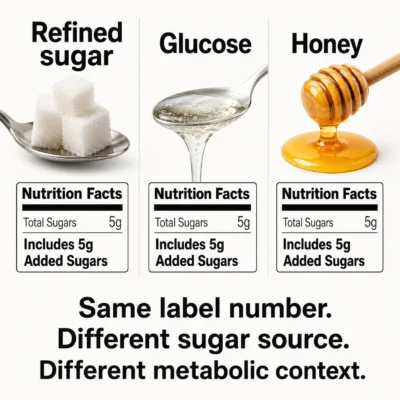
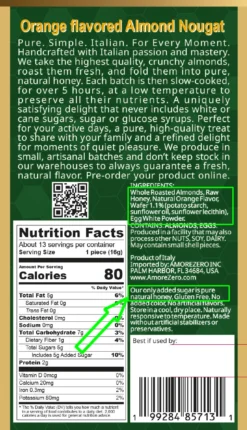
In other words, a snack containing 5g of refined sugar, one with 5g of glucose, and another where the sugars come from honey might all display the same line on the nutrition label: “Includes 5g of added sugars.”
However, the human body doesn’t read labels; it digests food. This is where it gets interesting, because from a biological and metabolic standpoint, these sugars are not identical. The body breaks them down into simpler molecules, processes them through different metabolic pathways, and triggers varying levels of insulin production. Among these sugars, glucose is the one that enters the bloodstream directly, raising blood sugar levels and prompting the pancreas to respond by releasing insulin.
The source of added sugars matters
The label lists “5 g of added sugars,” but the source is important.
Honey contains natural sugars, and FDA labeling regulations classify these sugars as “added sugars” when honey is used as an ingredient.[14]
However, this does not mean that honey is chemically or metabolically identical to refined white sugar, glucose syrup, or corn syrup.
Bees produce honey from flower nectar. During the production process, enzymes from the bees help transform the sugars found in the nectar.[13] The glucose portion generally represents about 23-36% of honey’s total sugars; the remainder consists of water, fructose, organic acids, enzymes, amino acids, phenolic compounds, flavonoids, minerals, rare sugars, and other minor components.
What studies say about honey and the glycemic response
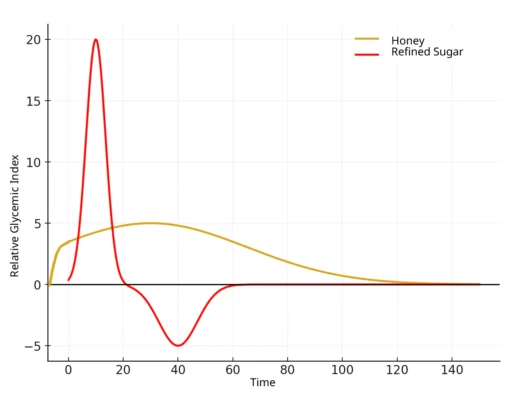
Several studies support the idea that honey may behave differently than glucose or sucrose.[2][3]
A notable systematic review and meta-analysis published in Nutrition Reviews analyzed controlled feeding studies regarding honey and cardiometabolic risk factors. The authors reported that honey consumption was associated with a reduction in fasting blood glucose, total cholesterol, LDL cholesterol, fasting triglycerides, and ALT levels, alongside an increase in “good” HDL cholesterol.[1]
This does not mean that honey never affects blood sugar levels. Nor does it mean that honey can be consumed without limits.
However, it does demonstrate that the claim “all sugar is the same” is overly simplistic.
So, do not ask yourself: “How many grams of sugar are listed?”
The better question is: “What type of sugar is it?”
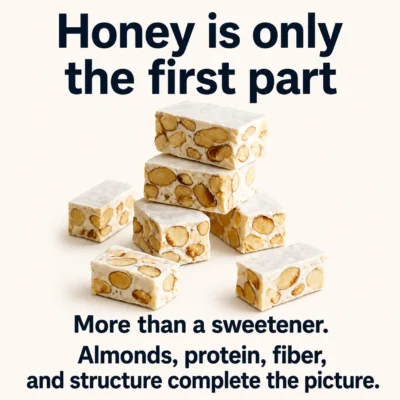
Honey is only the first part of the AmoreZero story
If AmoreZero were just honey, the explanation would end here.
But AmoreZero is not just honey.
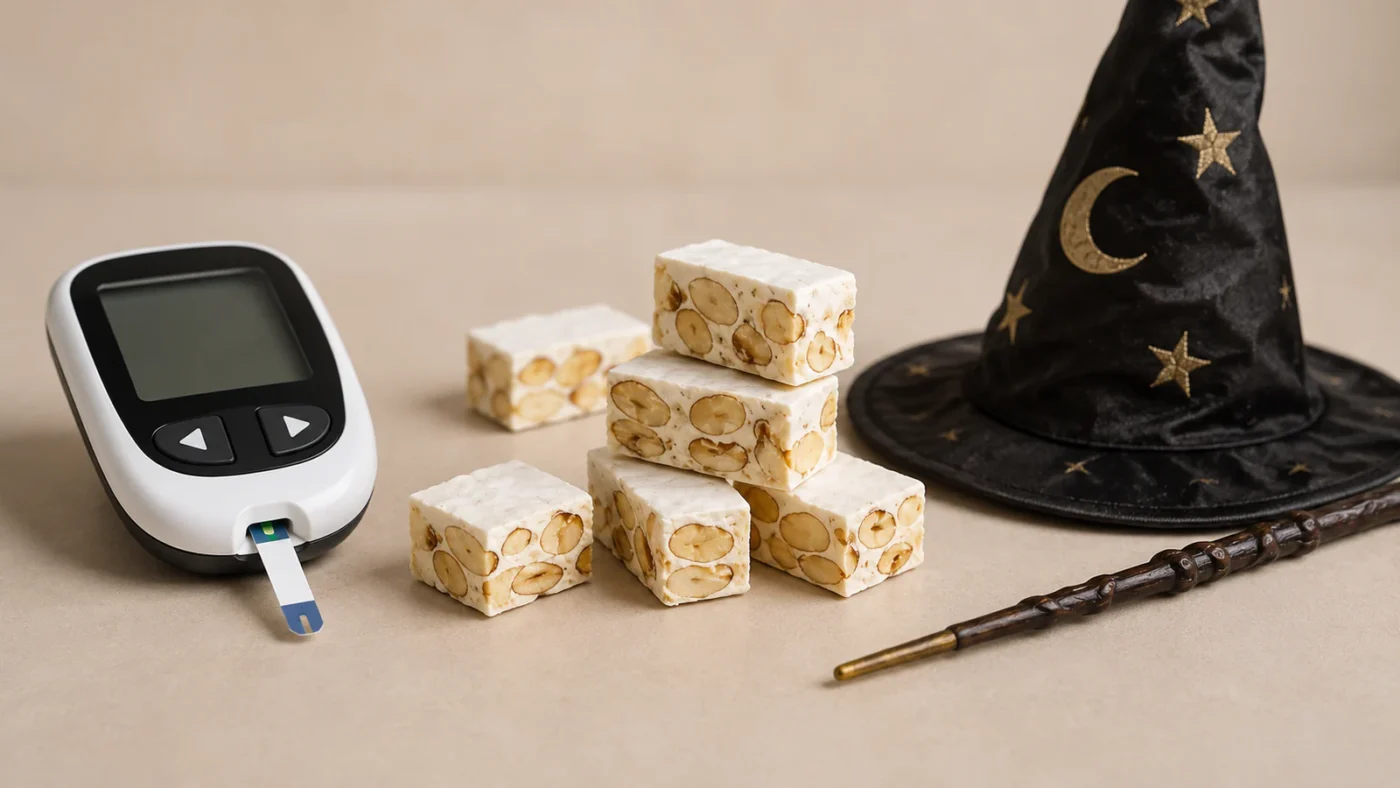
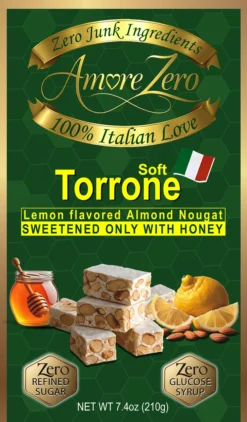
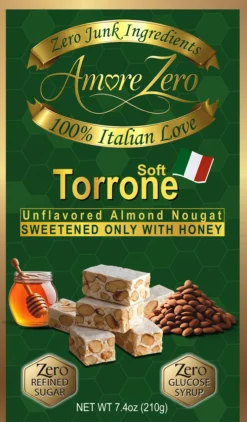
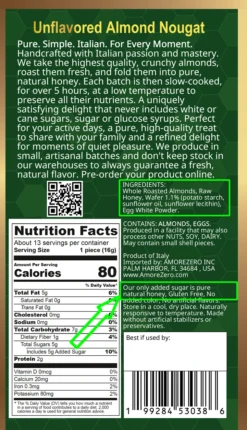
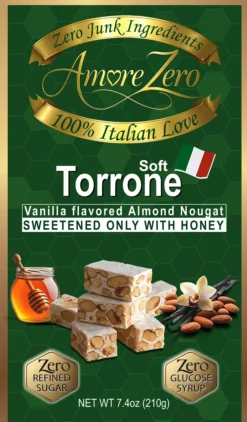
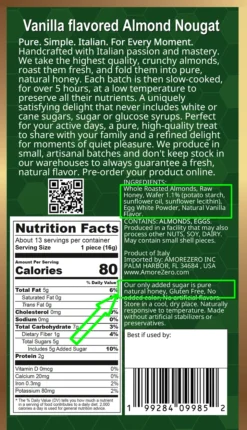
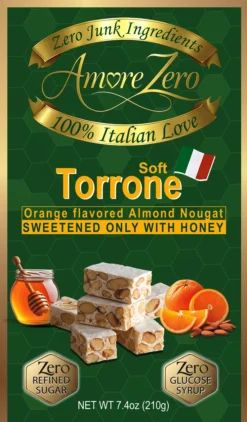
AmoreZero Snack is inspired by traditional Italian torrone, but it is built differently: whole roasted almonds come first, raw honey is the only sweetener, and there is no refined sugar or glucose syrup.
This is where the food matrix becomes central.
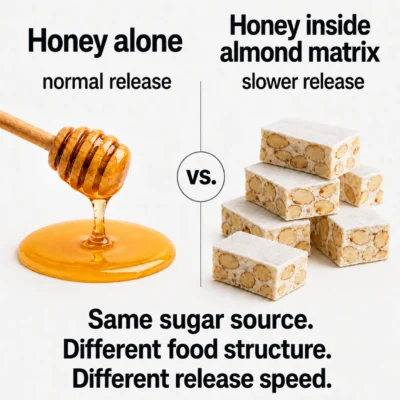
What is a food matrix?
Simply put: the same sugar can behave differently depending on the food containing it.
Food is not merely a list of nutrients.
Researchers use the term “food matrix” to describe the physical and chemical structure of a food: how its nutrients are arranged, trapped, released, digested, and absorbed.
A review of glycemic responses and food matrix effects explains that blood glucose levels after eating depend not only on the type and concentration of carbohydrates but also on the food’s structure, gastric emptying, and the rate at which monosaccharides enter the bloodstream.[4]
Let’s see how.
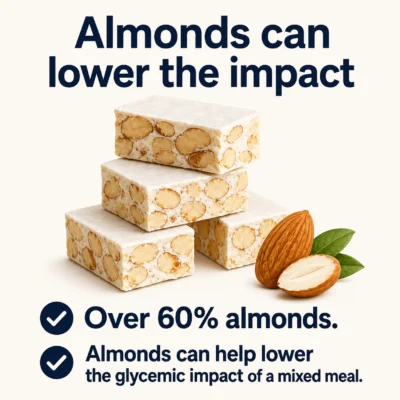
1) Almonds can reduce the glycemic impact of carbohydrates consumed with them
Several studies on almonds and blood sugar after eating have concluded that adding almonds progressively lowers the glycemic index of a mixed meal[5], reduces insulin levels and oxidative damage in healthy individuals[6], and lowers blood glucose concentrations while increasing satiety[7].
AmoreZero contains a high quantity of almonds, which provide fats, fiber, plant-based proteins, and minerals, as well as a dense texture.
Therefore, when honey is consumed as part of an almond-rich food, the glycemic response may be better than when honey is consumed on its own.
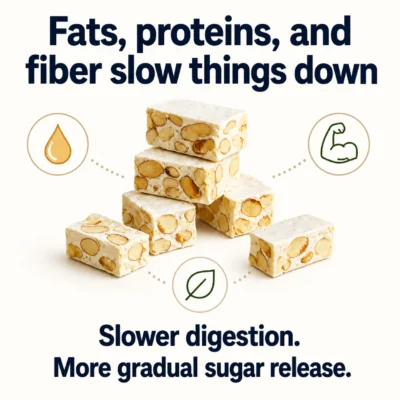
2) Fats, proteins, and fiber slow things down
If digestion and absorption slow down, the same amount of carbohydrates can result in a flatter curve.
The glycemic response depends partly on the rate of processing.
If the body digests and absorbs sugars rapidly, the blood sugar curve may rise more sharply.
Various studies explain how fiber[8] and fats slow down digestion and can lead to a more gradual and lower rise in blood sugar levels. It is also worth noting that meals containing fat lead to a slower rise in blood sugar[9] and can significantly slow gastric emptying, thereby attenuating post-meal spikes in glucose, insulin, and GIP in people with type 2 diabetes.[10][11]
Moreover, research on gastric emptying confirms that the rate at which food leaves the stomach plays an important role in glycemia after eating and incretin hormone responses.[12]
What this means inside AmoreZero
This combination may slow the rate at which sugars become available.
This is not a medical claim; it is an explanation based on nutritional science.
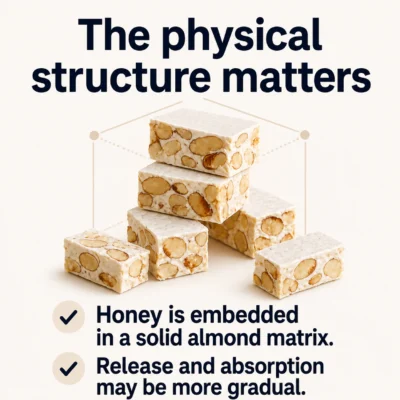
3) The physical structure of AmoreZero Snack could be important
The secret may not lie in the individual ingredients, but rather in the structure itself.
This is the most interesting part.
Amorezero snack is not a beverage, it is not liquid honey, it is not syrup, it is not dissolved sugar; rather, it is a compact, chewy structure that naturally contains a combination of almonds, honey, fats, plant proteins, and fiber.
Research on food matrices shows that the physical structure of food can alter the glycemic response. One study describes how whole apples, applesauce, and apple juice can elicit different glucose and insulin responses, even when they come from the same food source.[15]
The same principle may apply here as well.
Honey consumed on its own is immediately available to the body.
However, honey contained within a chewy almond matrix may release differently during chewing, digestion, gastric emptying, and intestinal absorption.
As a result, this could help explain why the physiological response differs from consuming the same amount of honey on its own.
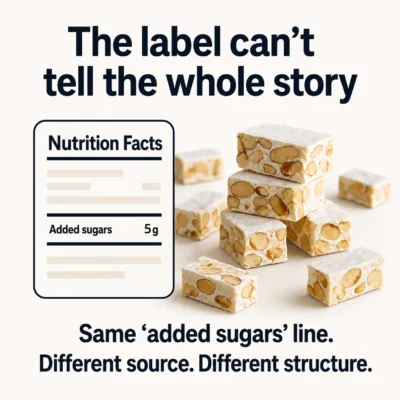
Why the nutrition facts label can’t tell the whole story
That is why two foods with the same amount of added sugars can behave differently.
The nutritional value table is necessary and useful.
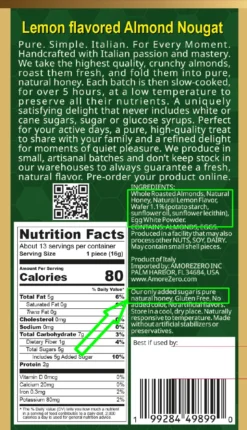
It provides information on calories, fat, carbohydrates, sugars, added sugars, protein, sodium, and other values.
However, it does not fully describe the food’s structure.
It does not tell us whether the sugar is dissolved in a beverage, trapped within fruit fibers, mixed with fats and proteins, or embedded in a solid almond matrix.
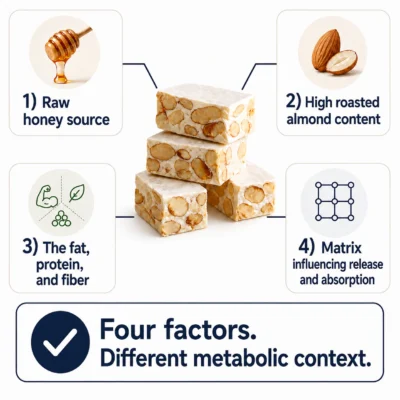
Why might AmoreZero behave differently?
The most plausible explanation isn’t magic. It comes down to a combination of the four factors we’ve seen so far:
- The added sugars come from honey—not refined sugar or glucose syrup—which may contribute to a different blood sugar response.
- Almonds make up a large portion of the product, over 60%, and help lower the glycemic impact of the foods consumed alongside them.
- The fat, protein, and fiber content can slow down digestion and absorption, flattening the post-meal glycemic response.
- The AmoreZero Snack matrix physically holds the honey within a solid structure, which can influence the rate at which sugars are released and absorbed.
All in all, these four factors may create a different metabolic context for AmoreZero compared to snacks containing refined sugars, glucose syrup, corn syrup, or industrial syrups.
This is the science behind the “magic.”
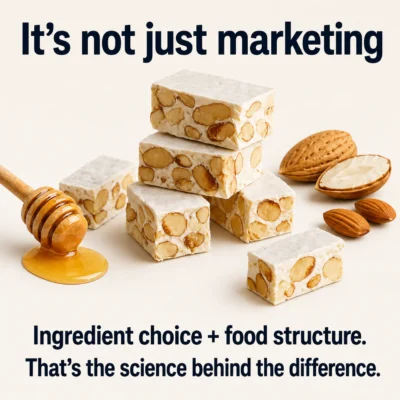
The difference isn’t just about marketing
It comes down to the choice of ingredients—the source of the honey, the almond content, the fats, fibers, and proteins, and the food matrix itself—as well as the cooking process used to combine these elements.
For those who read labels carefully and want to avoid industrial ingredients, this is a great alternative.
AmoreZero: magic or science?
At first, it might seem like magic.
However, the reason is not mysterious.
It isn’t magic. It’s food science.
Try it and decide for yourself
References
[1] Ahmed A et al. “Effect of honey on cardiometabolic risk factors: a systematic review and meta-analysis.” Nutrition Reviews. 2023. Oxford Academic
[2] Samanta A, Burden AC, Jones GR. “Plasma glucose responses to glucose, sucrose, and honey in patients with diabetes mellitus: an analysis of glycaemic and peak incremental indices.” Diabetic Medicine. 1985. PubMed
[3] Deibert P et al. “Glycaemic and insulinaemic properties of some German honey varieties.” European Journal of Clinical Nutrition. 2010. PubMed
[4] Shkembi B, Huppertz T. “Glycemic Responses of Milk and Plant-Based Drinks: Food Matrix Effects.” Foods. 2023. MDPI
[5] Josse AR et al. “Almonds and postprandial glycemia—a dose-response study.” Metabolism. 2007. PubMed
[6] Jenkins DJA et al. “Almonds decrease postprandial glycemia, insulinemia, and oxidative damage in healthy individuals.” The Journal of Nutrition. 2006. PubMed
[7] Mori AM et al. “Acute and second-meal effects of almond form in impaired glucose tolerant adults: a randomized crossover trial.” Nutrition & Metabolism. 2011. BMC
[8] Giuntini EB et al. “The Effects of Soluble Dietary Fibers on Glycemic Response: An Overview and Futures Perspectives.” Foods. 2022. PMC
[9] Harvard T.H. Chan School of Public Health. “Carbohydrates and Blood Sugar.” Harvard Nutrition Source
[10] Murillo S et al. “Culinary strategies to manage glycemic response in people with type 2 diabetes: A narrative review.” Frontiers in Nutrition. 2022. PMC
[11] Gentilcore D et al. “Effects of fat on gastric emptying of and the glycemic, insulin, and incretin responses to a carbohydrate meal in type 2 diabetes.” Journal of Clinical Endocrinology & Metabolism. 2006. PubMed
[12] Marathe CS et al. “Relationships between gastric emptying, postprandial glycemia, and incretin hormones.” Diabetes Care. 2013. PMC
[13] Rossano R et al. “What Are the Proteolytic Enzymes of Honey and What They Do Tell Us? A Fingerprint Analysis by 2-D Zymography of Unifloral Honeys.” PLOS ONE. 2012. PMC
[14] U.S. Food & Drug Administration. “Added Sugars on the Nutrition Facts Label.” FDA
[15] Haber GB, Heaton KW, Murphy D, Burroughs LF. “Depletion and disruption of dietary fibre. Effects on satiety, plasma-glucose, and serum-insulin.” The Lancet. 1977;2(8040):679–682. PubMed